
Fake proof of income documents drive loan fraud, rental scams, and synthetic identities across global financial systems.
But these documents are pivotal to several processes. Whether it's for a remote work visa, free school lunch, or to settle insurance disputes on the Indian subcontinent, proof of income documents provide authorities with vital information about an individual’s monetary status.
However, in 2026, as onboarding becomes fully digital and credit decisions are made in minutes, proof of income fraud has become both easier to execute and harder to detect.
Online pay stub generators, editable PDF templates, and generative AI tools now allow fraudsters to fabricate convincing income documents without being expert criminals.
Proof of income is a financial anchor. It determines whether someone qualifies for a mortgage, a personal loan, a rental property, a credit line, or even immigration sponsorship.
For lenders, landlords, fintech platforms, and compliance teams, missing a fake proof of income can mean inflated credit exposure, regulatory breaches, and systemic fraud losses.
Read on to learn about the threat of fake proofs of income, how fake proof of income documents are used in income document fraud and proof of income scams, how to spot a fake proof of income, and how AI-powered systems can help.
Check out our “how to spot fake documents” blog to learn about more common document forgeries.
Threat intel: Template data about fake proof of income
Our Threat Intelligence Unit collects data about template farms which make and distribute fake document templates for fraudulent purposes.
Below, you'll find an infographic containing data about all the fake proof of income templates we've found: their availability, their distributors, the institutions or "issuers" whose documents have been exposed, and how much it costs to buy one.
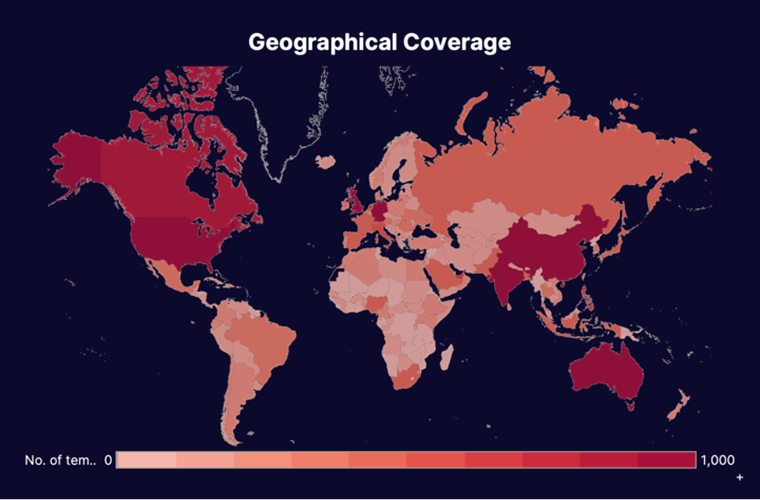
Threat intel stats: Proof of income
Find more information about the threat these farms pose in our threat intel blog and webinar content.
What is proof of income?
Proof of income is used to confirm that an individual or entity earns a stated level of income from a legitimate and traceable source.
It is not a single standardized document, but a category of financial evidence relied on during credit assessments, underwriting decisions, rental approvals, immigration reviews, and compliance checks.
Proof of income helps someone demonstrate that they genuinely earn what they claim to earn, and that the income is stable enough to support a financial or contractual obligation.
The most common proof of income documents include:
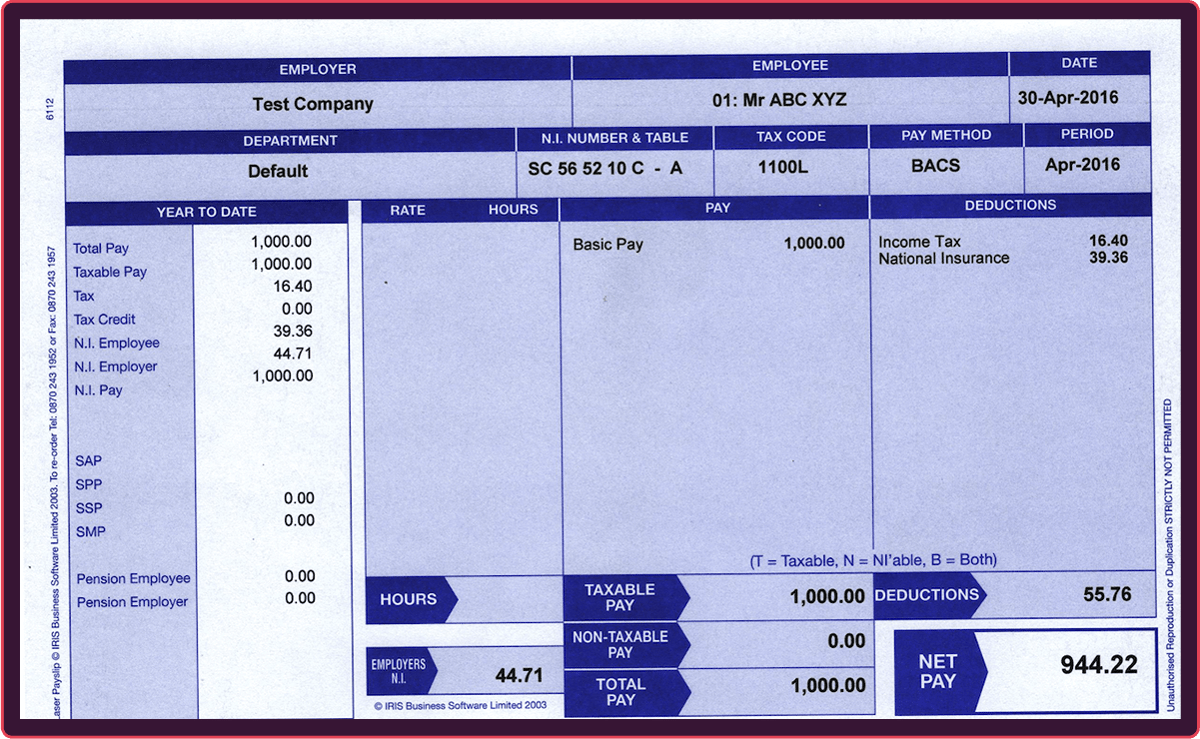
- Pay stubs. Issued by an employer, typically showing gross pay, net pay, tax deductions, pay period, and employer details.
- Bank statements. Used to evidence recurring salary deposits, income consistency, and source of funds.
- Tax returns and tax transcripts. Annual filings submitted to tax authorities (such as IRS Form 1040 in the United States or HMRC summaries in the United Kingdom) that summarize declared earnings.
- W-2 or P60 forms. Year-end income summaries issued by employers for tax reporting purposes.
- Employer verification letters. Formal letters confirming employment status, salary, and tenure.
- Government benefit or pension statements. Official documentation confirming ongoing social security, disability, or retirement income.
- Profit and loss statements. Used by self-employed individuals to summarize revenue, expenses, and net income.
- Dividend or investment income statements. Documentation of recurring income from securities, trusts, or other financial assets.
Acceptable documents vary by jurisdiction and regulatory framework. For example:
- United States. Federal tax returns, IRS tax transcripts, W-2 forms, recent payslips, and bank statements to assess income stability and debt-to-income ratios.
- United Kingdom. Pay stubs, P60 forms, tax year overviews from HM Revenue and Customs (HMRC), and bank statements. Self-employed applicants are often required to provide SA302 tax calculations and corresponding tax year summaries.
- European Union. Requirements vary by member state, but lenders and regulated institutions commonly rely on national tax authority income statements, employer-issued salary certificates, recent pay stubs, and bank statements reflecting recurring income.
Self-employed applicants across all regions generally face higher scrutiny and are often required to provide multiple years of tax filings or certified financial statements to demonstrate income consistency.
This is because self-employed income is often variable, seasonally influenced, or tied to business performance, making it more difficult for lenders and institutions to assess long-term stability from a single reporting period.
All proof of income documents should confirm that an applicant has a legitimate, traceable, and sufficient income source to support financial risk decisions.



Why is proof of income important?
Proof of income sits inside high-stakes financial and regulatory decision systems. It directly influences whether someone can borrow money, sign a lease, access regulated services, or qualify for benefits.
When income verification fails, the losses are not theoretical. They show up as defaults, charge-offs, compliance violations, and reputational damage.
Here’s how proof of income is used for document verification across different industries and workflows:
- Retail and commercial lending. Lenders assess debt-to-income ratios and repayment capacity before approving personal loans, auto loans, or business financing.
- Mortgage underwriting. Long-term home loans require stable and verifiable earnings to support multi-year repayment obligations.
- Property rental and leasing. Landlords and property managers evaluate whether tenants can consistently meet monthly rent.
- Buy now pay later (BNPL) and embedded finance providers. Short-term installment products rely on income signals to reduce default risk.
- Immigration, visa processing, and government benefits. Authorities verify that sponsors or applicants meet minimum income thresholds for residency, family sponsorship, and means-tested assistance programs, using income documentation to determine eligibility and subsidy levels.
- Insurance underwriting. Income can affect disability coverage limits, life insurance assessments, and policy risk tiers.
- Fintech platforms and neobanks. Used in onboarding and credit line approvals to prevent synthetic identity fraud.
- Crypto exchanges and high-risk financial services. Income evidence may be required during enhanced due diligence or source-of-funds reviews.
These documents are widely trusted because they originate from systems that are legally required to report accurate earnings and tax information, which gives institutions confidence that the income data reflects a real, traceable financial relationship rather than a self-declared figure.
When proof of income is falsified, it can lead to irresponsible lending decisions, loan stacking, regulatory penalties, and systemic credit losses. In responsible lending frameworks, failing to properly verify income can also expose institutions to enforcement action.
If you’d like to understand how fraudsters create fake proofs of income, visit our “types of document fraud” hub to explore common tactics.
How is a fake proof of income used?
A fake proof of income is a gateway document. Once a fraudster successfully establishes a believable income narrative, they unlock access to credit, housing, financial services, and regulated products that would otherwise be out of reach.
Proof of income fraud is typically embedded inside a broader scheme. Here are the most common ways fake proof of income is used:
- Loan fraud. Applicants inflate salary figures on pay stubs or fabricate employment entirely to qualify for unsecured loans, credit cards, or mortgages they cannot repay.
- Loan stacking. Fraudsters submit multiple credit applications in a short period using the same fabricated income documents before negative data is shared across lenders.
- Synthetic identity fraud. Criminals combine real and fabricated identity elements, then strengthen the profile with strong income documentation to pass underwriting checks.
- Rental and housing fraud. Fake pay stubs or bank statements are used to secure leases with no intention of long-term payment.
- Credit limit manipulation. Existing customers submit forged income documents to increase credit limits or unlock higher borrowing thresholds.
- Benefits manipulation. Income documents may be falsified upward or downward depending on whether the goal is to qualify for assistance or demonstrate financial stability.
- Immigration sponsorship fraud. Sponsors inflate income to meet minimum financial requirements for visa or residency approvals.
- Mule account creation. Fraud rings fabricate stable employment and income histories to pass enhanced due diligence checks at banks or fintech platforms.
In many cases, fake proof of income documents are bundled with forged proof of address and identity documents. The income layer adds credibility. A synthetic identity with a strong salary looks lower risk to automated scoring systems and human underwriters alike.
But unlike biometric identity checks or government ID validation, proof of income is usually indirect. Institutions are not verifying income at the source. They are verifying a document that claims income exists.
That creates a structural weakness in the document verification chain.
Income documents are issued by thousands of employers, payroll providers, accountants, and tax authorities across jurisdictions. There is no single global standard, no unified registry, and no consistent format. That diversity makes template-based validation fragile and manual review inconsistent.
In a wider document verification context, proof of income is often the most complex layer. Identity documents confirm who someone is. Proof of address links them to a location. Proof of income attempts to predict future financial behavior based on past earnings.
When that predictive layer is manipulated, the entire risk model built on top of it becomes distorted.
Signs of a forged or fake proof of income
Missing a fake proof of income means your institution has accepted a fabricated earning profile. That false income anchor can distort credit decisions, inflate exposure, enable loan stacking, or help synthetic identities pass underwriting checks.
Proof of income fraud is rarely about visual formatting alone. It is about whether the claimed earning narrative is economically and behaviorally plausible.
At scale, manual reviewers struggle because income fraud is contextual. A payslip may look legitimate. A tax return may appear complete. But the financial story behind them may not hold together.
Below are the structural and contextual signals that matter most.
4 signs of a fake proof of income
These signals apply regardless of whether the document is a pay stub, tax return, employer letter, or bank statement. They focus on plausibility, timing, density, and relational integrity.
1. The income does not realistically align with the broader financial profile. The claimed salary contradicts other observable signals about the applicant’s economic reality.
- A six-figure annual income paired with minimal transaction history or persistent overdrafts.
- Reported income significantly exceeds realistic market compensation for the stated position, industry, and experience level.
- Strong monthly income with no evidence of savings accumulation over time.
- Reported stable income alongside repeated short-term borrowing behavior.
2. The income appears strategically timed to unlock credit. Fraud-driven income manipulation often clusters around decision points.
- A sharp salary increase immediately before a mortgage or loan application.
- Newly issued employer letters dated days before a credit limit request.
- Two or three months of high salary deposits following a long period of low activity.
- Income documentation submitted only after a prior affordability rejection.
3. Employer or income source serial fraud signals. Fraud infrastructure often reuses income sources.
- The same small employer appears across multiple unrelated applicants.
- Identical salary figures declared across different profiles.
- Repeated use of a niche company name not visible in public business registries.
- The same direct contact number is listed for employment verification across multiple applicants with no apparent connection.
4. Geographic and industry compensation mismatches. The salary does not align with labor market realities.
- Claimed compensation significantly above regional averages for that role.
- Entry-level positions reporting senior-management pay bands.
- Self-employed individuals reporting margins far beyond industry norms.
- Remote work claims tied to companies that do not operate in the stated geography.
These structural signals do not depend on layout or formatting. They test whether the income narrative makes economic sense.
Contextual signals of a fake proof of income
Contextual signals depend on the document type used, but they focus on real-world logic rather than cosmetic design. In our experience reviewing income documentation across lending and onboarding workflows, the strongest indicators appear when the financial behavior behind the document does not match how income normally functions.
Pay stubs
When we deal with pay stubs, we look at compensation logic, not branding. Fraudulent pay stubs often show net pay that does not reasonably follow from gross pay after tax and statutory deductions. Bonus structures may appear unusually consistent month after month. Payroll cycles shift unexpectedly between weekly and monthly formats.
In some cases, employer details cannot be independently verified, or the organization appears inactive in public corporate registries.
Bank statements used as proof of income
From our data, income fraud frequently surfaces in deposit behavior. Salary deposits may arrive from personal accounts rather than business or payroll entities. Deposits may be identical round numbers across months, which is uncommon once taxes and deductions are applied.
Payment timing can fluctuate irregularly despite being labeled as fixed monthly salary. Short-lived salary patterns that begin shortly before application are particularly high risk.
Tax returns and annual income summaries
Tax documents often reveal inconsistencies in liability logic. Declared income may not correspond to realistic tax brackets. Withholding amounts may appear implausibly low relative to reported earnings. Filing status, dependents, or self-employment claims may conflict with other submitted records.
Refund outcomes may not logically align with income and deduction levels.
In most onboarding and underwriting workflows, these documents are not received directly from the tax authority. They are submitted by the individual applicant. That means institutions are verifying a taxpayer-provided copy of a filing, not pulling data from the source system itself.
This indirect submission process creates an additional opportunity for alteration, selective editing, or fabrication before the document ever reaches the reviewer.
Disclaimer: A fake proof of income does not need visual flaws to succeed. It only needs to tell a convincing financial story. The real red flags appear when income claims are evaluated against economic reality, timing patterns, and cross-application behavior.
Manual review alone struggles to detect these relational inconsistencies consistently, especially at scale.
How to verify proof of income
Proof of income verification is typically performed by underwriting teams, credit risk departments, compliance units, onboarding analysts, and fraud investigators across lending, fintech, insurance, rental housing, and government benefit programs.
Verification can be done manually or through automation.
Manual review is still common, however, contextual income fraud is significantly harder to detect than visual forgery. A document can look legitimate while the financial narrative behind it is fabricated.
AI-powered systems address this gap by analyzing structural construction, cross-document consistency, and submission patterns at scale. They evaluate how a document was built and how it fits into a broader behavioral context, rather than simply checking whether required fields are present.
That said, manual review remains embedded in many workflows. If you are still verifying proof of income documents manually, here are practical techniques that can strengthen your process.
Manual verification of proof of income
The best way to manually verify a proof of income is by using the signs we mentioned above. After that, you can turn to the following resources:
- Confirm employer registration through official business registries. In the United States, reviewers can search state Secretary of State business databases (this source compiles all of them). In the United Kingdom, Companies House provides public company records.
- Validate tax filings through official tax authority tools. For U.S. applicants, IRS tax transcripts can be requested directly through the Internal Revenue Service website (https://www.irs.gov/individuals/get-transcript). In other jurisdictions, national tax authorities provide similar transcript or verification services.
- Cross-check salary benchmarks using labor statistics. Compare claimed income against publicly available wage data such as the U.S. Bureau of Labor Statistics Occupational Employment and Wage Statistics database (https://www.bls.gov/oes/) to assess whether compensation aligns with realistic regional ranges.
Fraud networks exploit this limitation by submitting coordinated, high-volume applications that appear individually plausible but collectively reveal patterns.
Using AI and machine learning to spot a fake proof of income
AI-powered income verification focuses on structural construction and cross-document intelligence rather than reading and storing sensitive personal data.
AI document verification emphasizes how a document was built, not just what it says.
Key benefits include:
- GenAI detection stack. Identifies subtle visual and structural patterns associated with generative AI–produced documents, with a false positive rate under 1%.
- Explainable forensic output. Provides clear, reviewable evidence showing why a document was flagged, enabling defensible underwriting and audit readiness.
- Adaptive decisioning. Allows institutions to tune risk thresholds based on product type, transaction value, or regulatory sensitivity.
Automation vs. AI
Rules-based automation can check that an income document is recent, that a pay stub includes a gross and net figure, or that a bank statement shows recurring deposits. That helps enforce process consistency, but it does not validate whether the income story is authentic.
AI is built for the part automation cannot reach: detecting manipulation that is intentionally crafted to pass checklists. Instead of treating proof of income as a static form, it evaluates the document as a produced artifact and as a behavioral signal.
It can flag documents that share hidden structural fingerprints, detect coordination across submissions, and identify signs of generative AI creation or templated manufacturing even when the visible fields look correct.
Conclusion
Proof of income feels solid because it is numeric. Salaries, tax totals, net pay, annual earnings. The numbers look precise. They flow neatly into affordability ratios and automated decision engines.
But precision is not the same as authenticity.
When this verification layer gets compromised, credit models approve risk they would otherwise reject. Exposure increases quietly. What looks like responsible lending on paper becomes systemic vulnerability in practice.
Resistant Documents addresses income fraud at the level where it actually occurs: document construction and coordinated submission behavior. By detecting manufactured payroll artifacts, GenAI-generated income documents, and infrastructure-level reuse patterns, we help institutions protect the integrity of the financial decisions built on top of them.
Scroll down to book a demo.
Frequently asked questions (FAQ)
Hungry for more fake proof of income content? Here are some of the most frequently asked fake proof of income questions from around the web.
What counts as valid proof of income?
Valid proof of income depends on the requesting institution and jurisdiction, but commonly accepted documents include:
- Recent pay stubs
- Tax returns
- W-2 or P60 forms
- Bank statements
The document should show recurring salary deposits, employer verification letters, and government benefit statements issued within the last 30 to 90 days.
Can bank statements be used as proof of income?
Yes, bank statements are often used as supporting proof of income because they show recurring salary deposits and payment consistency.
How can I get proof of income if I’m self-employed?
Self-employed individuals typically use tax returns, profit and loss statements, accountant-certified income summaries, or bank statements reflecting business revenue.
Many lenders request two or more years of tax filings for self-employed workers to assess income stability and reduce the risk of inflated short-term earnings.
How to spot proof of income with AI?
Resistant AI detects fake proof of income by analyzing structural construction patterns, cross-document relationships, and signs of generative AI manipulation.
Is there software to detect fake proof of income?
Yes. Resistant Documents document fraud detection software is specifically designed to identify fake proof of income at scale.
Who needs to check for fake proof of income?
Fake proof of income is not reviewed “by an industry.” It is reviewed by specific teams responsible for affordability, eligibility, and risk decisions.
Key roles include:
- Credit underwriters. Assess borrower income stability, calculate debt-to-income ratios, and approve or decline loan applications.
- Mortgage processors and underwriters. Validate multi-year income history, employment continuity, and repayment capacity before issuing long-term loans.
- Fraud analysts and financial crime investigators. Identify manipulated pay stubs, coordinated employer reuse, and loan stacking behavior across applications.
- KYC and onboarding specialists. Review income documents during account opening to determine product eligibility and credit limits.
- Benefits eligibility officers. Evaluate income thresholds for means-tested government assistance programs.
- Claims adjusters (insurance). Verify reported earnings in disability or income protection claims to prevent inflated payout calculations.
- Tenant screening and leasing analysts. Confirm rental affordability and detect fabricated salary documentation during applicant vetting.
Anyone responsible for approving credit, setting exposure limits, calculating payouts, or determining eligibility relies directly on income verification as a core control.
Is making a fake proof of income illegal?
Yes. Creating, altering, or submitting a fake proof of income is considered fraud in most jurisdictions.

Fraud awareness, examples, and lessons
Learn more about fraud in specific industries, best practices, and targeted documents.
View all
In May 2026, a Dallas resident was convicted of running coin-operated “amusement machines” without a business ...

NEW YORK & PRAGUE – 1 October 2026 – Ocrolus, the AI workflow and analytics platform for lenders, today ...
For a few hundred dollars, sellers on Telegram promise to boost your credit score using someone else's credit ...

Key takeaways Fake certificates can use real numbers Fraudsters can copy a genuine business’s VAT number onto a ...

In our last piece, we introduced 3 different types of account farmers and how each of them can be detected. Now, ...

The most dangerous account farmers are the ones you'll never notice. A year of buying accounts and tracking these ...