
First-party fraud is gaining attention in 2026. Nacha is seeking industry input on cases where a customer falsely claims an authorized ACH (Automated Clearing House) debit was unauthorized, prompting their bank to return the payment.
The issue extends beyond payments. In its 2026 Cybercrime Report, LexisNexis Risk Solutions says first-party fraud accounted for 38.3% of fraud classifications reported by its network’s clients in 2025, up from 35.9% the previous year.
First-party fraud can be difficult to detect because the applicant or customer may actually be who they claim to be. So rather than creating or stealing an identity, fraudsters often use authentic documents and evidence to make misleading claims.
Those who alter or create false evidence no longer need specialist skills. They can use PDF editors, online templates, or generative AI to produce convincing documents at scale. This can increase the volume of evidence teams need to assess. If false claims go undetected, losses can accumulate.
In this blog, we’ll explain how first-party fraud works, its common types, the industries it affects, and how organizations can prevent it.
What is first-party fraud?
First-party fraud occurs when someone uses their own identity, account, or credentials and deliberately provides misleading information or makes a false claim to gain a benefit. They may seek approval for a car loan, a lower insurance premium, a refund for an item they kept, or a payout for an exaggerated loss, among other things.
In third-party fraud, by contrast, someone uses another person’s identity or account without authorization.
Someone committing first-party fraud may manipulate both true and false information to fit the story they want to tell. This can involve a false statement, a material omission (like concealing existing debts), or document fraud, such as submitting an altered bank statement. A genuine document can also be presented with a misleading explanation.
First-party fraud doesn’t always involve taking money with no intention of paying it back. For example, an applicant may alter a pay stub to exaggerate their income and obtain a loan they wouldn’t otherwise qualify for, even though they intend to repay it. If the lender approves the loan and the borrower later struggles to make payments, the lender may be left with an outstanding debt to recover.
How does first-party fraud work?
First-party fraud can occur at different points in a customer relationship. A person might provide false information when applying, misuse an account after opening it, or make a false claim about a transaction. These are possible points where fraud can occur, rather than stages that every case follows.
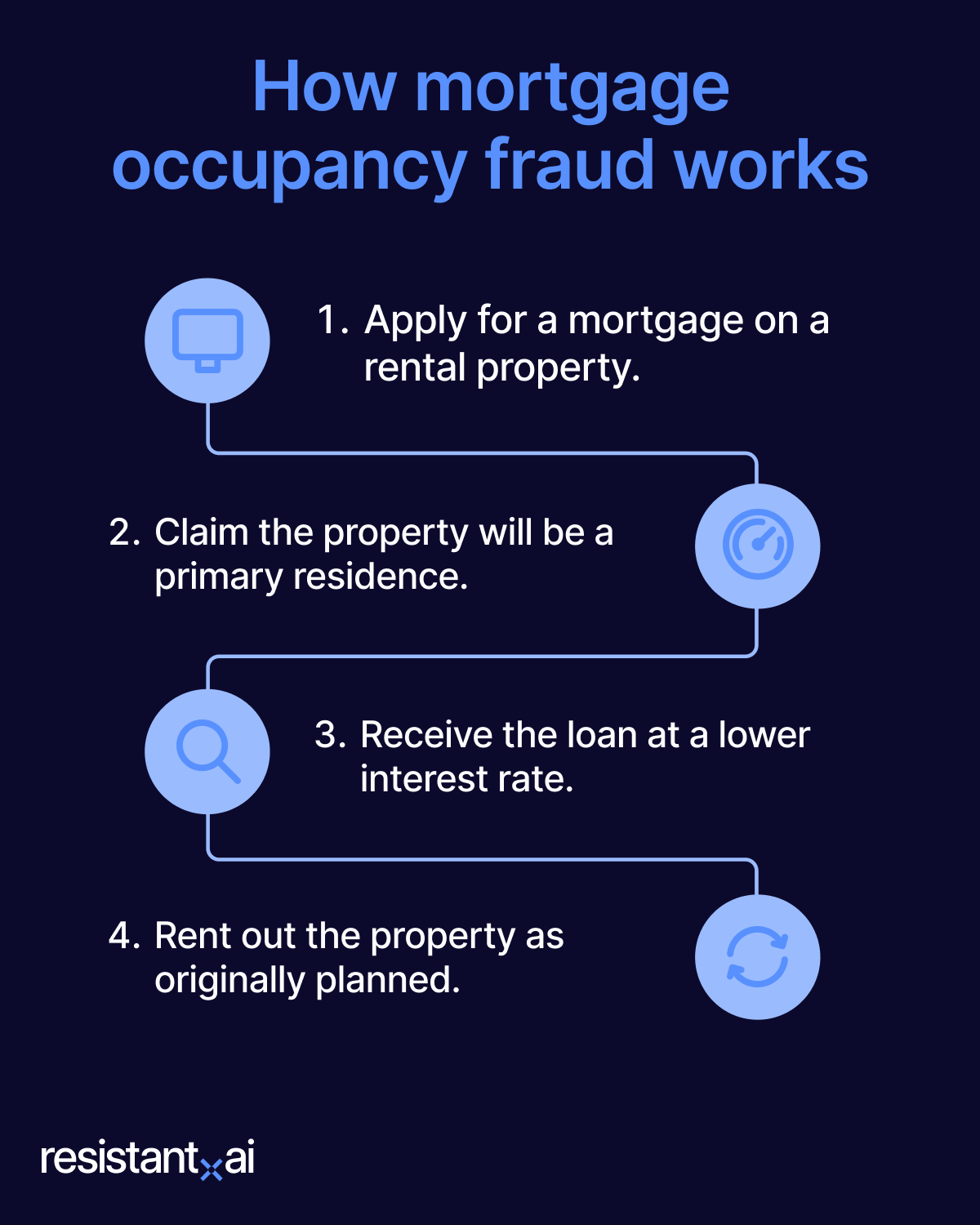
Here’s how first-party fraud can play out when someone is attempting to get a better interest rate on their mortgage:
- Apply for the mortgage. A buyer applies under their own name to finance a property they intend to rent out.
- Misrepresent a material detail. The buyer tells the lender they plan to live in the property as their primary residence, even though they intend to use it as a rental. Borrowers may make this misrepresentation to obtain more favorable financing terms.
- Obtain the loan. The lender accepts the occupancy claim and approves the mortgage at a lower rate than it would have offered for an investment property.
- Use the property. After closing, the borrower rents out the property as planned while benefiting from the lower rate. They may make every mortgage payment, but the original application was still based on a deliberate false statement.
This is one possible scenario. Other forms of first-party fraud can arise after an account is opened or when a customer makes a false dispute or claim.
Why is first-party fraud important?
First-party fraud is a major category of reported fraud. It can be difficult to detect because the person involved uses their own identity, even when the information or claims they provide are false. Some individual losses may be small, but repeated cases can add up. If fraud goes unrecognized, organizations may underestimate their exposure.
Here’s how first-party fraud can affect organizations:
- Losses can accumulate. A single false refund may seem manageable, but repeated claims across a large customer base can add up. Other schemes, such as mortgage or insurance fraud, can involve substantial losses from a single case.
- Fraud can go unrecognized. First-party fraud can be difficult to s because the customer uses their own identity. A loan applicant might provide false income information and later say it was a mistake. If the borrower stops making payments, the lender may treat the loss as a credit loss without detecting fraud.
- Fraud is easier to attempt. Online forums and social media share tactics for abusing refund policies, while template farms sell editable bank statements and utility bills. Generative AI can also make it easier to create or alter evidence without specialist skills.
- Investigation costs can grow. Suspicious applications, disputes, and claims can require teams to gather records, contact customers, and investigate inconsistencies. As cases increase, so does the workload for fraud, credit, claims, and customer service teams.
- Customer trust can suffer. Stricter checks can help address fraud, but they can also delay genuine applications and claims. Poorly handled investigations can lead to complaints and damage customer trust.
Organizations face two risks when responding to first-party fraud. If they miss deliberate fraud, losses can continue to build. But if they treat every inconsistency as fraud, genuine customers may face delays or have legitimate claims rejected. Teams need to investigate suspicious cases without assuming intent from a single discrepancy.
Types of first-party fraud
First-party fraud takes different forms depending on the benefit sought and the process involved. Knowing the different methods, including types of document fraud, can help teams recognize where false information may influence a decision. The following categories show some common approaches, though a single case can involve more than one:
Application fraud
In application fraud, someone uses their own identity but deliberately provides false information or leaves out material details to influence an approval decision. The misrepresentation might concern income, employment, assets, or existing liabilities.
Example: A business owner uses ChatGPT to alter an old employment contract, making it appear they still work for a Fortune 500 company. They also try to conceal signs of editing in the metadata. The lender accepts the contract and offers a lower interest rate based on income the applicant no longer receives.
Bust-out fraud
In bust-out fraud, someone builds a reliable credit history to gain access to more credit, then uses it without intending to repay, leaving the lender with the unpaid balance.
Example: A customer uses a credit card responsibly for a year, making payments as their limit rises from $5,000 to $20,000. They then make large purchases and cash advances with no intention of repaying, leaving the lender with an unpaid balance.
Credit washing
Credit washing involves falsely disputing accurate information, such as a debt or late payments, to remove it from a credit report and appear more creditworthy. People also pay a credit booster to artificially inflate credit scores.
Example: In 2013, former California assemblyman Carl Washington admitted to filing false identity-theft reports to remove his unpaid debts from his credit report. He then applied for new credit without disclosing those debts. He agreed to plead guilty to bank fraud involving $193,661 in losses.
False unauthorized-payment claims
A false unauthorized-payment claim occurs when someone authorizes a payment, then knowingly tells their bank they did not. The claim may involve a card payment, bank transfer, or other payment method.
Example: In a 2012 US court case, Bank of America customer Carline Merisier reported more than $15,000 in withdrawals and card transactions as unauthorized. The bank denied her claim, and a court found the transactions had been authorized as part of a scheme to defraud the bank.
False refund or return claims
False refund or return claims involve knowingly giving a business false information to obtain a refund or replacement. A customer might, for example, claim that a delivered item never arrived. They could also use the false claim to dispute the card payment with their issuer, a form of chargeback fraud.
Example: Florida prosecutors alleged that a customer bought high-value items from Amazon, returned cheaper substitutes, and kept the originals. According to investigators, he received refunds and, when Amazon refused one, filed chargeback claims with card issuers. The alleged losses totaled more than $40,000.
Insurance Fraud
First-party insurance fraud occurs when an applicant or policyholder deliberately provides false information to obtain coverage, better terms, or a payout.
Example: Between 2021 and 2023, California resident Denni Rodas Diaz filed five auto-insurance claims based on pre-existing vehicle damage and staged accidents. His insurer used photographic evidence to show that the vehicles already had the damage before the reported accidents.
What does first-party fraud look like in your industry?
First-party fraud can take similar forms across industries, but the decisions and evidence involved differ. A lender assessing affordability faces a different challenge from a marketplace reviewing a delivery claim. Here’s how first-party fraud plays out in different industries:
What is first-party fraud in banking?
Banks can encounter first-party fraud when a customer uses their own identity or account to obtain a benefit they aren’t entitled to. The customer may pass KYC verification even though they misrepresent other information or misuse the account. For example:
- Obtaining credit or an overdraft. An applicant knowingly exaggerates their income or misstates their employment to qualify for an overdraft, credit card, or loan. The bank may approve a facility it would not have offered with accurate information.
- Depositing a check twice. A customer knowingly deposits the same check through a mobile app and again at a branch or ATM. If both deposits are credited, they may withdraw the extra funds before the bank identifies the duplicate.
- Falsely disputing a payment. A customer authorizes a payment, then tells their bank it was unauthorized. The bank must handle the claim and decide what action to take under the applicable rules.
- Obtaining a fee waiver. A customer falsely claims they were charged a fee because of a bank error, seeking a refund they aren’t entitled to.
What is first-party fraud in lending?
Lenders use underwriting to decide whether to approve a loan and what interest rate to offer. False information or documents can distort that decision, as a Close Brothers Motor Finance case illustrates. Even after KYC checks, a genuine applicant can misrepresent their finances:
- Misrepresenting income or employment. An applicant claims to earn more than they do or says they still work for a company they have left. The loan may appear more affordable than it is.
- Concealing existing debt. A borrower leaves out a loan when asked about their liabilities. The lender may offer additional credit without accounting for all their repayment obligations.
- Misrepresenting assets. An applicant presents borrowed money as savings, concealing both the source of the funds and the obligation to repay them.
- Misstating the loan’s purpose. An applicant claims they’ll use a business loan to purchase equipment, but intends to use the funds for personal expenses. The lender may approve the loan based on a business purpose that doesn’t reflect how the money will be used.
What is first-party fraud in insurance?
Fraud in insurance can affect both policy pricing and claims decisions. The National Association of Insurance Commissioners distinguishes between soft fraud, such as exaggerating a genuine claim or lying on an application, and hard fraud, such as deliberately causing a loss to collect a payout. It describes soft fraud as more common. Examples include:
- Misrepresenting an application (soft fraud). A driver knowingly understates their annual mileage to obtain a lower premium. The insurer prices the policy using inaccurate information.
- Exaggerating a genuine loss (soft fraud). A policyholder reports a real burglary but adds items that were never stolen, seeking a larger payout.
- Staging a loss (hard fraud). A policyholder deliberately damages their vehicle, then claims the damage resulted from an accident to collect a payout.
What is first-party fraud in payments?
First-party payment fraud can occur when a customer knowingly makes a false claim to dispute a payment. The process depends on how the payment was made and what the customer claims happened:
- False ACH debit claim. A customer authorizes a loan repayment from their bank account, then tells their bank it was unauthorized. The bank may return the payment, affecting the recipient.
- False card fraud claim. A customer makes a card purchase, then tells their card issuer they didn’t authorize it. The dispute may lead to a chargeback and a loss for the merchant.
- False non-delivery claim. A customer receives an item but disputes the card payment, claiming it never arrived. The issuer may process a chargeback even though the merchant fulfilled the order.
What is first-party fraud in marketplaces?
Marketplaces deal with buyers and sellers, so fraud can affect decisions on either side of a transaction. Someone may use their own account while misrepresenting a product, order, or return:
- Misrepresenting a product. A seller knowingly lists a counterfeit item as genuine. The marketplace may process the sale and release payment based on a false description.
- Falsifying fulfillment. A seller takes payment for orders they don’t intend to deliver and provides false shipping information. A seller could also build a legitimate sales history before taking orders and disappearing.
- Abusing the return process. A buyer requests a refund but sends back a cheaper item instead of the original purchase. The marketplace or seller may issue the refund without recovering the original item.
Best practices for preventing first-party fraud
First-party fraud losses can accumulate when false claims and suspicious activity go unrecognized. The right practices can help teams identify potential fraud earlier, investigate it consistently, and limit further losses.
Here are some best practices to put in place:
- Verify information that affects the decision. Check material claims against supporting documents and independent sources where possible. For example, compare declared income with pay records and deposits, allowing for differences in pay periods and deductions.
- Monitor activity after onboarding. Use transaction monitoring to flag changes that warrant review. A lender might examine a sharp increase in credit use alongside the customer’s payment history.
- Assess claims against relevant records. Compare payment disputes with authorization data, marketplace refunds with delivery and return records, and insurance claims with policy details and evidence of the loss. Give customers a way to clarify discrepancies.
- Coordinate across teams. Make relevant application, account, and claim records available to authorized investigators. Establish who owns each case and how findings are shared across fraud, credit, payments, and claims teams.
- Use AI to assess documents. AI-powered document verification can flag signs of manipulation across different document types. This helps teams prioritize documents for review, while investigators assess the findings in context.
Detect first-party fraud with AI
A first-party fraudster may use their real identity, making identity checks alone insufficient. And signs of a skillfully altered document may not be visible to a reviewer, especially if they have a large workload. AI document verification can help teams examine documents at scale and focus manual reviews on cases that need closer attention:
- Document analysis. AI-powered tools examine file structure, metadata, and visual features for signs of manipulation or generation. Document-agnostic analysis can assess different document types without a separate template for each issuer, while showing reviewers the indicators behind a flag.
- Connections across submissions. Document analysis can flag possible reuse or shared templates across applications or claims. For example, Payoneer used cross-document analysis to identify repeated forgery patterns across submissions.
- Risk-based review. Teams can configure thresholds to reflect their risk appetite, routing higher-risk submissions for closer review while allowing lower-risk submissions to continue through the workflow.
Conclusion
First-party fraud can be difficult to detect because the person involved uses their own identity. False or altered claims can slip through checks, and losses can accumulate across applications, payments, and payouts. Meanwhile, accessible tools make it easier to produce altered documents at scale.
Resistant AI examines document structure for signs of manipulation across different document types, helping investigators identify evidence that needs closer review. See how your team can strengthen document checks against first-party fraud.
Scroll down to book a demo.

Fraud awareness, examples, and lessons
Learn more about fraud in specific industries, best practices, and targeted documents.
View all
Fake Ohio business licenses can make a company appear authorized to do work it has no legal right to perform. In ...
Male premade
A business registration confirms that a company exists, but it doesn’t always show who owns it. In September 2026, ...

Application fraud in 2026 is easier to attempt: accessible tools and services help applicants turn false claims ...

Within the fake document ecosystem, things can change fast. Four months ago, we reported that OnlyFake, the ...